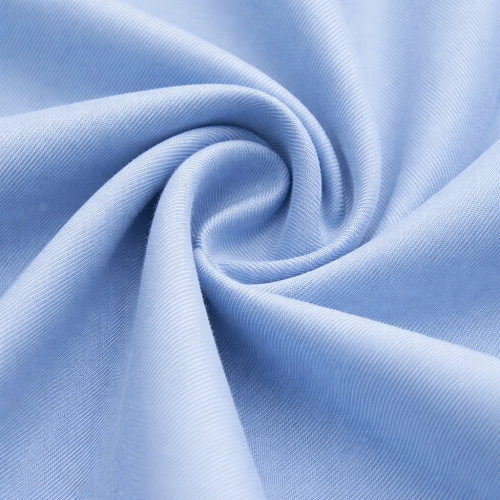
Twill woven fabrics are among the most enduring and versatile textile constructions in the apparel world. Revered for their distinctive weave structure, durability, and visual appeal, twills find widespread application in shirts—from casual flannels and dress shirts to performance and workwear.
What Is Twill Fabric? The Fundamentals
At its core, twill refers to a weave structure, not a specific fiber or material. The defining characteristic of twill is its diagonal line or wale that runs across the fabric surface. This diagonal is created by the specific way warp (lengthwise) and weft (crosswise) yarns interlace.
Classic Twill Weave Pattern
In a basic plain weave, warp and weft yarns intersect one over, one under. In twill, the pattern shifts—commonly two or more warp yarns float over two or more weft yarns before interlacing, and the point of interlacement shifts each row.
A classic example is a 2/2 twill:
- Warp yarns float over two weft yarns
- Then under two
- With each successive row shifting the float by one yarn
This offset creates the diagonal pattern characteristic of twill.
There are two visual directions:
- Right-hand twill: Diagonal lines ascend to the right.
- Left-hand twill: Diagonal lines ascend to the left.
Designers select one based on aesthetics and performance.
Technical Structure: Weave Mechanics and Yarn Interaction
Understanding twill requires a closer look at its mechanics.
Float Length and Drapability
Twill fabrics are defined by floats—the number of yarns a single thread crosses before interlacing.
Longer floats generally translate to:
- Softer hand feel
- Better draping
- Higher sheen (due to larger surface exposure)
Warp vs. Weft Dominance
Many shirt twills are warp-faced—meaning more warp yarns appear on the fabric surface.
This yields:
- Greater strength and abrasion resistance (warp yarns are typically stronger)
- Enhanced luster—aesthetic shine especially noticeable in dress shirtings
Yarn Count and Density
- Yarn count measures fineness—higher counts (e.g., 80s, 100s) indicate finer, smoother yarns.
- Ends Per Inch (EPI) and Picks Per Inch (PPI) indicate warp and weft yarn density.
Dress shirt twills often have high EPI/PPI for a closer, smoother surface, while casual twills may have lower densities for texture and comfort.
Properties That Make Twill Ideal for Shirts
Twill fabrics combine a suite of performance and aesthetic properties that make them especially suitable for shirts.
Durability
The diagonal weave offers:
- High abrasion resistance
- Lower susceptibility to tearing
This makes twill suitable for everyday wear and work shirts.
Drapability and Comfort
Compared to plain weave, twill drapes more fluidly—helping shirts conform to the body without stiffness.
Resistance to Wrinkling
Twill fabrics resist creasing due to:
- The diagonal structure’s ability to hide wrinkles
- Slight surface texture disguising imperfections
This makes them a favorite for travel and work wardrobes.
Visual Depth and Texture
Twill’s diagonal lines provide subtle surface interest without being overly bold. Variants like herringbone introduce artistic motifs while retaining technical performance.
Breathability and Moisture Handling
When made from natural fibers like cotton, twill offers excellent breathability and moisture absorption—key for comfort next to the skin.
Common Fibers Used in Twill Shirt Fabrics
Twill is a weave structure; the fiber used dramatically influences fabric character.
Cotton Twill
Cotton is the most prevalent fiber for twill shirts.
Soft hand
Good breathability
Easy care
Variants include:
- Serge (fine, smooth)
- Chino twill (tightly woven, often heavier)
Cotton Blends
Blending cotton with synthetics (e.g., polyester) can enhance:
- Wrinkle resistance
- Durability
- Color retention
Wool Twills
More common in suiting and outerwear than shirts, lightweight wool twills do exist for luxury shirting, prized for:
- Thermal regulation
- Drape
- Natural odor resistance
Synthetic Twills
Polyester or nylon twills are typically used in performance or work shirts for:
- Exceptional abrasion resistance
- Quick-dry properties
- Dimensional stability
Popular Twill Shirt Types and Variants
Twill shirtings come in many forms, each with unique visual or performance characteristics.
Plain Twill
The simplest diagonal pattern, easy to dye and solid in appearance.
- Classic corporate or casual shirts
- Subtle sheen and soft feel
Herringbone
A zig-zag diagonal resembling a broken twill.
- Elevated aesthetic
- Common in smart casual shirts
Broken Twill
Patterns where the diagonal changes direction intermittently.
- Unique visual texture
- Adds design interest without bold prints
Jacquard Twills
Incorporate more complex motifs in the twill structure itself.
- Often seen in dressier shirts
- Elevated surface complexity
Finishes and Treatments
Fabric finishing refines performance and appearance:
- Mercerization: Enhances luster, strength, and dye affinity (common in cotton twills)
- Sanforization: Controls shrinkage
- Brushing: Adds softness (often on casual, heavier twills)
- Moisture-wicking finishes: Applied to performance shirts
Comparing Twill to Other Weaves
Twill vs. Plain Weave
| Feature |
Twill |
Plain |
| Wrinkle resistance |
Better |
Standard |
| Texture |
Diagonal |
Flat |
| Durability |
High |
Moderate |
| Drapability |
Better |
Lesser |
Twill vs. Satin Weave
- Satin has longer floats, yielding more sheen but less durability.
- Twill balances strength with moderate sheen—ideal for shirts requiring both.
Manufacturing Considerations
Loom Selection and Setup
- Modern shuttleless looms produce consistent twill quality.
- Precision in warp tension and yarn quality is critical due to the heavier float structure.
Dyeing and Colorfastness
- Uniform dye uptake is easier with mercerized yarn
- Higher yarn counts produce smoother surfaces with richer color depth
Care and Maintenance of Twill Shirts
While properties vary by fiber, general guidance includes:
- Machine wash cold or warm (cotton)
- Avoid high heat—can affect shrinkage and finish
- Iron on medium heat—twill resists wrinkles but may need light pressing
- For wool blends—dry clean if label specifies
Sustainability Considerations
Twill shirting can intersect with sustainability in several ways:
- Organic cotton: Reduces pesticide impact
- Recycled synthetics: Waste reduction
- Low-impact dyes and finishing: Minimizes chemical discharge
Brand transparency in sourcing and fabrication methods matters for eco-minded consumers.
Why Twill Still Matters in Shirts
Twill woven shirt fabrics are a testament to thoughtful textile engineering. With roots tracing back centuries, the twill weave remains relevant because it delivers:
- Durability
- Comfort
- Visual appeal
- Versatility—across casual, dress, and performance categories
Whether worn in a boardroom, fieldwork, or weekend outing, twill shirts occupy a uniquely balanced space in the wardrobe—technical yet timeless.